Why Electric Car Battery Fires Can Reignite After a Crash
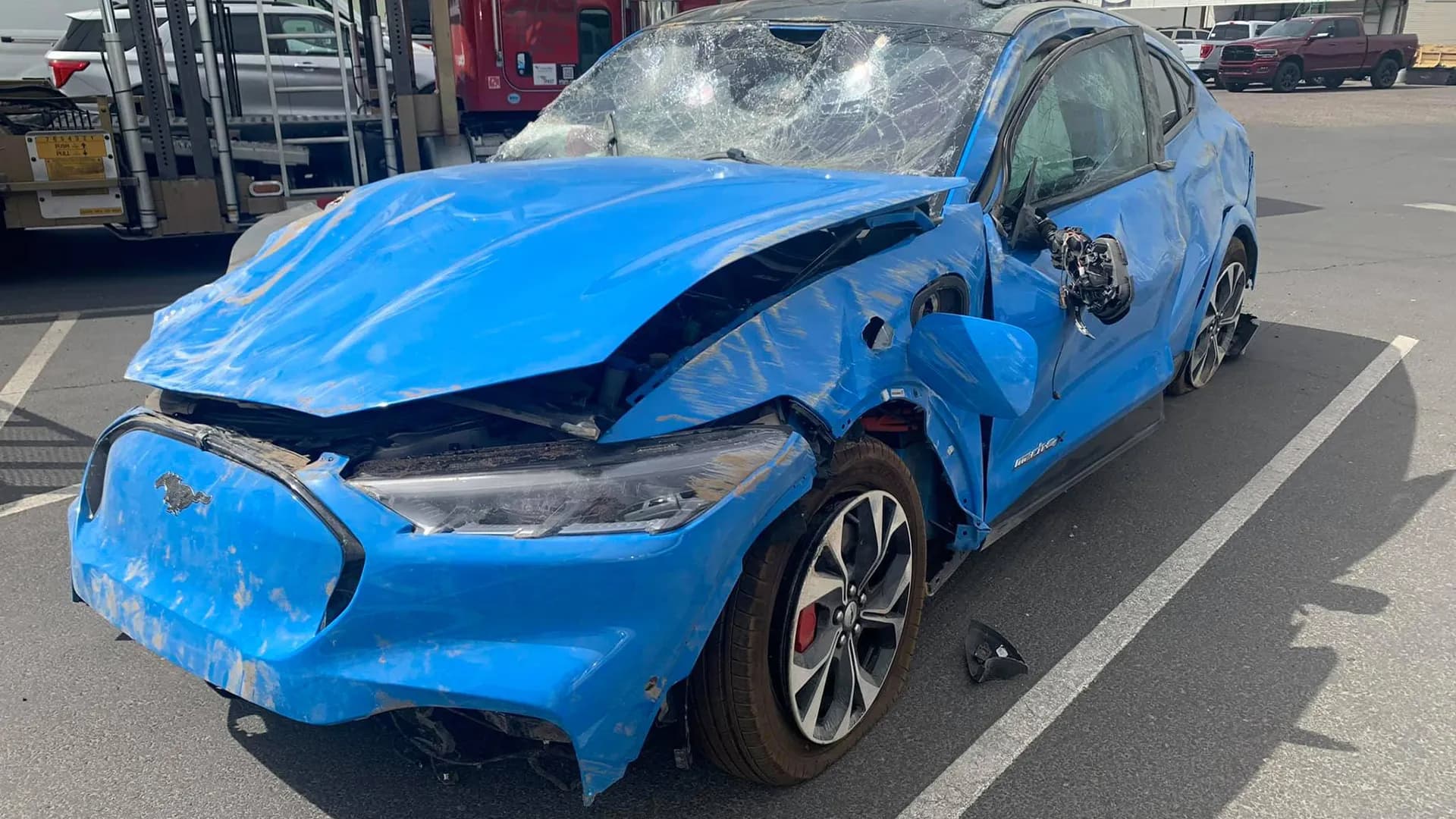
Data show that most crashed EVs never burn. Still, a vehicle with possible battery damage should be treated as an unknown high-voltage and fire risk until professionals have evaluated it.
Why Electric Car Battery Fires Can Return
A damaged battery may retain a large amount of energy even when its cells look inactive. If a collision creates an internal short circuit, one cell can continue heating until it affects a neighboring cell.
That chain reaction is called thermal runaway. The cell builds heat faster than it can release it, and its internal chemistry begins to break down. As the temperature rises, the cell may vent hot, flammable gas. This runaway effect can begin immediately upon impact or hours later as damaged cells continue heating.
Mechanical damage can start the process by crushing or puncturing part of the pack. A bent section may also become electrically isolated, leaving energy trapped inside damaged cells.
Because the battery sits deep inside a sealed module, its hottest areas may remain out of sight and difficult for water to reach even after smoke disappears from around the vehicle, meaning a temporary pause in visible smoke proves nothing.
The word “reignite” can be misleading. The pack is not relighting like a candle wick; heat may be moving through it until another cell crosses its failure threshold. The National Transportation Safety Board report, Safety Risks to Emergency Responders From Lithium-Ion Battery Fires in Electric Vehicles, treats delayed ignition and stranded energy as hazards distinct from the initial fire.
While studies routinely show EVs catch fire far less often than gasoline vehicles, exact rate comparisons deserve caution because the underlying datasets can use different vehicle populations, reporting rules and definitions of “fire.”
What to Do After an EV Collision
Get occupants away from the vehicle when it is safe to move, then call emergency services. Tell the dispatcher that the car is electric and provide its make and model. If the vehicle is burning or was submerged, say so clearly.
Stay well back and follow the distance and positioning instructions responders give you. There is no universal setback for every collision because the vehicle’s condition and local fire-service procedures will shape the response.
When an occupant may be injured
If someone may have a neck or back injury, follow the dispatcher’s instructions rather than moving that person without guidance. An active fire or another immediate threat may still make evacuation necessary.
Battery condition and physical trauma are separate emergencies. A car with no smoke can contain badly injured occupants, while a damaged pack may threaten people who walked away without obvious trauma.
Motor vehicle crashes account for 38% of new spinal cord injury cases reported since 2015, according to the National Spinal Cord Injury Statistical Center. Changes in mobility can affect employment and long-term costs; the Robinette Legal Group blog about spinal injuries explores the impact of these spinal cord injuries in the context of serious crashes involving West Virginia families.
Leave the battery alone
Do not return for belongings or attempt to inspect the high-voltage battery. Switching off the car does not remove the energy stored inside the pack, and an owner should attempt a shutdown only when the manufacturer’s instructions identify a specific procedure as safe.
Keep a collision-damaged vehicle unplugged, even if it still drives. A handheld extinguisher is not a reason to remain beside a burning traction battery; trained fire crews should handle suppression and pack cooling using the model’s emergency response guide.
Damaged EV Battery Warning Signs
Some failures remain hidden until they escalate, but the following outward signs warrant immediate evacuation:
- White or gray vapor beneath the vehicle; visible flame may follow
- Hissing or popping sounds from the pack area
- Fast-rising heat near the underbody
- Sparks, arcing or a new dashboard battery warning
- Leaked material or visible deformation of the enclosure
Observe these signs only from a safe distance. Do not crawl beneath the car, sniff suspected vapor, touch leaked material or move any closer to the vehicle.
Orange cabling commonly identifies high-voltage components in manufacturer guides available through NHTSA’s EV safety resources. Color is a labeling convention, not proof that a cable is safe. Never cut or unplug an exposed electrical component on a damaged EV.
If a new warning appears after the collision, move away and alert anyone nearby. Then tell the dispatcher what you observed without approaching the vehicle to confirm it.
How to Tow and Store a Crashed EV
Before the truck is sent, tell the tow dispatcher the exact make and model, the collision location, the condition of the battery area and whether the vehicle was submerged. The operator can then consult the manufacturer’s recovery instructions before attempting to move it.
Towing an EV After a Crash Depends on the Model
A flatbed is often appropriate, but it is not a universal requirement. Some EVs need dollies or wheel skates. Others have a specific neutral-release procedure or designated lift points.
The manufacturer’s towing instructions settle those questions. Turning the driven wheels can energize components on some vehicles, while poor hook placement can damage an underbody that contains the battery pack. Leave both jobs to the operator.
Safe Storage for a Crashed EV Needs a Controlled Location
A crashed EV should not be placed in a residential garage. A busy repair bay or tightly packed storage lot may also be unsuitable until qualified professionals have assessed the battery.
The appropriate spacing depends on the pack design and severity of the damage. Monitoring arrangements also vary, as does the necessary quarantine period, so directions from fire or recovery authorities should control the placement.
The receiving facility needs a clear handoff. It should know what happened during the collision and whether firefighters responded. Staff should also receive details about water exposure, observed warning signs and any temperature monitoring already completed.
Approaching an EV After Submersion
Members of the public should not approach or touch a submerged EV until emergency responders declare the area safe. Water exposure does not guarantee a fire, but a submerged battery fire risk can persist after recovery if water intrusion damages cells or electrical insulation.
That does not mean the water around every flooded car is energized. It also does not mean every submerged battery will ignite.
Saltwater raises the stakes. Conductive residue can remain on components, and corrosion may continue after the exterior has dried. NHTSA advises owners to follow manufacturer instructions and obtain a qualified inspection before a flood-exposed EV is towed, stored or repaired.
Never attempt a recovery with household equipment. If someone is trapped, call emergency services and follow the dispatcher’s instructions instead of making your own electrical assessment.
Common Questions About EV Battery Safety
Is overnight EV charging safe?
Generally, yes, when the vehicle and charging equipment are undamaged. The equipment should be properly installed, listed for its intended use and operated according to the manufacturer’s instructions.
Routine charging is a different situation from plugging in a collision-damaged or flood-exposed vehicle. For a closer look at another ordinary charging setup, EV.com’s guide to charging an EV from solar examines how home generation can work with an electric car.
What are the odds of a lithium battery exploding?
While overall rates remain low compared to combustion vehicles, risk changes with cell chemistry and pack size. Physical damage and charging conditions also matter, while different sources may use “explosion” to describe different events.
Thermal runaway and delayed fire describe the main collision-related concern more accurately than a movie-style explosion. The NTSB report does not assign a single probability to every battery or crash.
Is an electric car battery harmful?
An intact traction battery is enclosed for normal driving and charging, and occupants should not open or handle it. Once the enclosure is damaged, the warning signs and high-voltage precautions covered above apply.
What commonly starts an EV battery fire?
Crash damage can create the internal short circuit described earlier. Other incidents may involve overheating or an external fire. Charging faults, improper repairs and water intrusion are also considered during an investigation.
Visible flames alone do not establish the source. Investigators must examine the vehicle before deciding whether the battery, charger or another component started the fire.
Can a lithium battery burn while unplugged?
Yes. The cell stores energy internally, so disconnecting the charger does not eliminate the possibility of heating after physical damage. That remaining energy is the “stranded energy” identified in the NTSB report.
Can you predict that a battery is about to catch fire?
Not reliably by looking at the vehicle. Treat the warning signs listed above as reasons to leave the area rather than clues for a closer inspection.
After the Vehicle Is Inspected
Let the inspection findings determine what happens next. If professionals can assess the pack safely and the repair estimate is reasonable, repair may remain an option.
If replacement makes more sense, compare appropriate new and used EVs and bring the inspection reports when speaking with a dealer. A documented professional assessment gives that next decision a firmer starting point.
Comments
Subscribe for EV News and Reviews

AI Employee for Car Dealerships
Results in 30 days - Or We'll Give You Your Money Back